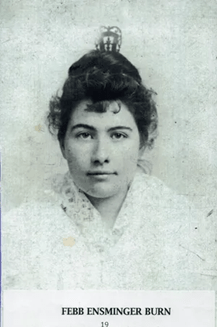
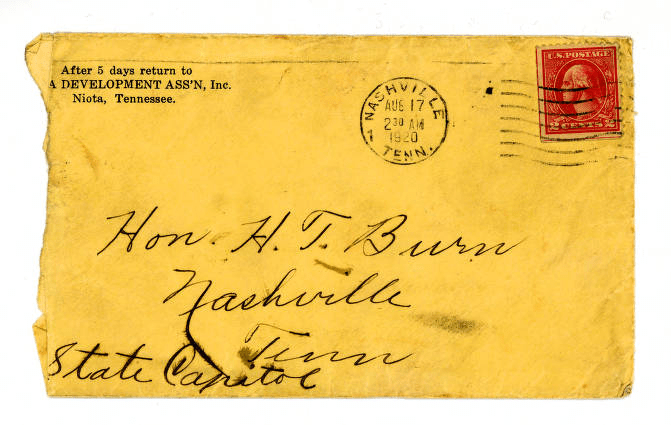
For my first public writing analysis, I chose Phoebe “Febb” Ensminger Burn’s letter to her son, former representative Harry Thomas Burn. This letter is considered the writing that granted women’s right to vote. A piece of writing that changed the course for feminism in America, all written by a mother.
The pathos of this letter is what persuades Harry Burn’s decision in the vote, as Febb Burn is not only his mother but retained a good relationship with her son. She calls herself by “Mama” to him and signs off the letter with “lots of love.”
But it wasn’t only her status as Burn’s mother, but also her status as a college educated woman that persuaded his vote. She was an intelligent, feminist woman, and years later Harry Burns would reflect on his decision in the turning vote:
“My mother was a college woman, a student of national and international affairs who took an interest in all public issues. She could not vote. Yet the tenant farmers on our farm, some of whom were illiterate, could vote.”
The letter is interesting, as it was never intended to be a public work, but became incredibly influential regardless. It’s an example of a work’s audience shifting into a larger sphere and creating change. Though the change it created remains largely in its ability to persuade Harry Burns’ vote, its ability as a feminist symbol persists.
It’s the kind of public work that gains popularity after it completed its “job.” It remained private up until the ratification of the 19th amendment, and then it, along with Harry Burns, changed the tide. Or you could say that Febb, along with Harry Burns, changed the tide.
The letter remains as a popular reminder of a mother’s love being able to change everything, even in the smallest and most personal way. Thanks to Febb Burns’ writing, the political sphere of the United States changed to where everyone had the right to vote, and allowing women to have a voice in their own government alongside the other half of the population.
I thought this was very nuanced post! I really liked the decision to analyze a letter, (especially since it’s audience was only ever meant to be Harry Burn). It’s always interesting when a piece of writing is brought into a completely new time/context. Obviously, this letter was only ever meant for Harry’s eyes, yet it is now in the broader public consciousness, and has become a symbol of hope for feminists.
I think its really interesting you explore the idea of how the letter was not intended to be a public work, but ended up being a public work eventually and lauded for its immeasurable influence on women’s rights. It makes me think about other letters or writings that were intended to be private, like diary entries, that ended up having a large cultural influence, such as Anne Frank’s diary.


 Intro to Public Writing: Carly Holladay
Leave a reply to slk5j Cancel reply